Automation Tools vs. Custom Code: When to Choose n8n and When to Build Your Own
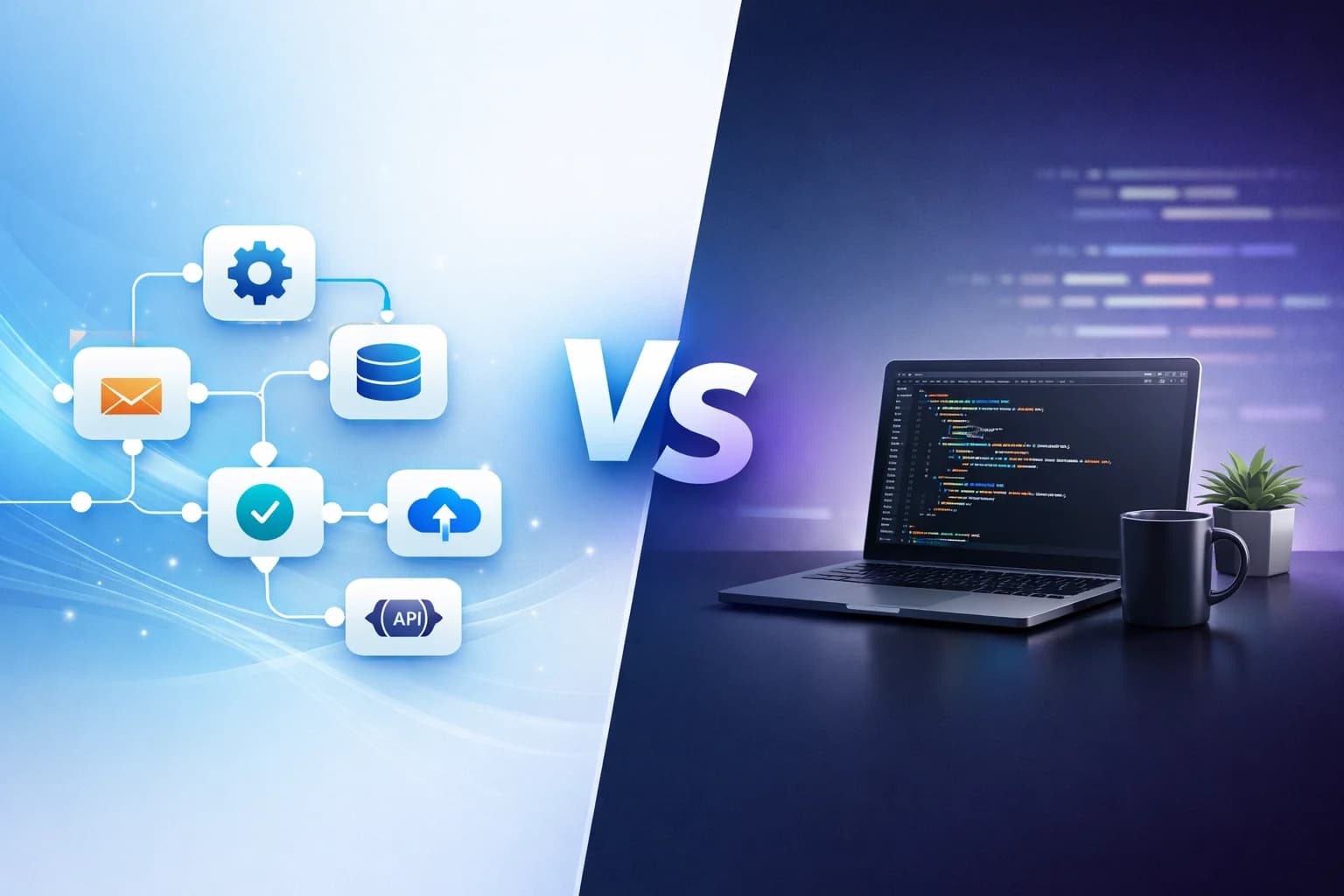
Every organization faces the challenge of optimizing workflows and integrating disparate systems. The question often arises: should we leverage powerful off-the-shelf automation platforms like n8n, or invest in building custom solutions from scratch? This decision isn't always straightforward and depends heavily on your specific needs, resources, and long-term goals. This post will explore the strengths and weaknesses of both approaches to help you make an informed choice.
The Appeal of Automation Tools (e.g., n8n, Zapier, Make.com)
Low-code/no-code automation platforms like n8n empower users to connect applications and automate tasks without extensive programming knowledge. They offer a visual interface to design workflows, making complex integrations accessible.
Pros:
- Speed and Agility: Rapid deployment of workflows. You can often set up an integration in minutes or hours, not days or weeks.
- Ease of Use: Visual builders and pre-built connectors reduce the learning curve, enabling non-developers or citizen developers to create automations.
- Lower Initial Cost: Often subscription-based, eliminating the need for upfront development costs for simple tasks. Maintenance and infrastructure are handled by the vendor.
- Extensive Integrations: Most platforms offer a vast library of connectors for popular services (CRMs, marketing tools, databases, etc.).
- Reduced Maintenance Burden: Updates, security patches, and server management are typically handled by the platform provider.
Cons:
- Limited Customization: While powerful, these tools have boundaries. Highly specific business logic or unique API interactions might be difficult or impossible to implement.
- Vendor Lock-in: Migrating complex workflows to another platform can be challenging and time-consuming.
- Scalability and Performance: For extremely high-volume tasks or real-time, low-latency requirements, managed platforms might introduce bottlenecks or higher costs.
- Cost Scaling: As your usage grows (more tasks, more data, more users), subscription costs can increase significantly.
- Security and Data Privacy: While reputable platforms are secure, you're entrusting your data flow to a third party. Specific compliance needs might require closer scrutiny.
The Power of Custom Tools
Building a custom automation tool involves developing software tailored precisely to your organization's unique requirements using programming languages and frameworks.
Pros:
- Full Control and Flexibility: You dictate every aspect of the tool, from its features and logic to its user interface and security measures. This is crucial for highly unique or complex business processes.
- Optimized Performance: Custom solutions can be highly optimized for specific workloads, offering superior speed and efficiency for high-demand scenarios.
- Tailored Security and Compliance: You have complete control over data handling, encryption, and compliance standards, which is vital for sensitive information or regulated industries.
- Ownership and Intellectual Property: The solution is entirely yours, potentially offering a competitive advantage.
- Long-term Cost Efficiency (for complex needs): While initial investment is higher, for very specific, large-scale, or core business automations, custom solutions can become more cost-effective over time by avoiding recurring subscription fees or limitations.
Cons:
- High Initial Investment: Requires significant upfront time and financial resources for development, testing, and deployment.
- Increased Maintenance Burden: You are responsible for all ongoing maintenance, updates, bug fixes, and infrastructure management.
- Requires Skilled Resources: Demands experienced developers, DevOps specialists, and potentially project managers.
- Slower Deployment: The development lifecycle is inherently longer compared to configuring an existing platform.
- Risk of Technical Debt: Poorly designed or maintained custom tools can accumulate technical debt, making future changes difficult and costly.
Making the Right Choice: Key Considerations
- Complexity and Uniqueness of the Task: Is it a standard integration (e.g., "send new CRM lead to Slack") or a highly bespoke process with unique business logic?
- Available Resources and Expertise: Do you have the development team, budget, and time to build and maintain a custom solution?
- Scalability Requirements: How much data will flow through the automation? How many executions per day/hour? Does it need to handle sudden spikes?
- Security and Compliance: Are there strict regulatory requirements (e.g., HIPAA, GDPR) that necessitate full control over data handling?
- Integration Ecosystem: Are all necessary connectors readily available in an automation platform, or do you need to integrate with obscure or internal systems?
- Long-term Vision: Is this automation a temporary fix, or a critical, evolving part of your core business strategy?
A Hybrid Approach?
Often, the optimal solution isn't one or the other but a combination. You might use n8n for standard integrations and quick automations, while developing custom microservices or scripts for highly specific, performance-critical, or unique business logic that n8n then orchestrates or triggers.
Conclusion
Choosing between an automation tool like n8n and a custom-built solution boils down to a careful evaluation of your project's scope, budget, timeline, technical capabilities, and strategic importance. For quick wins, standard integrations, and teams with limited development resources, n8n and similar platforms offer immense value. When faced with unique business challenges, stringent security demands, or the need for ultimate control and optimization, investing in custom development will provide the flexibility and performance required. Always align your choice with the specific context and future growth of your operations.